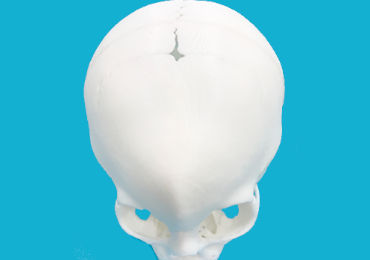
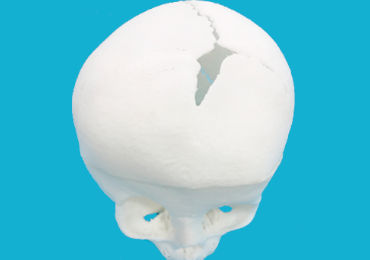
Craniosynostosis is a birth defect in which one or more of the soft joints between the bones of a baby’s skull (the cranial sutures) close too early. Depending on the suture involved it changes the shape of the skull and, in some children, raises the pressure inside the skull and compresses the growing brain.
Dr Vybhav Deraje has a special interest and expertise in managing Craniosynostosis. He leads the Craniosynostosis multidisciplinary team at Aster Hospital, Whitefield — the only hospital in India offering minimally invasive endoscope-assisted surgery together with Orthotic Helmet Therapy for these children.
Types of Craniosynostosis
- Non-Syndromic Craniosynostosis — coronal, metopic, sagittal, lambdoid or multisuture.
- Syndromic Craniosynostosis — Apert, Crouzon, Pfeiffer, Muenke and Saethre-Chotzen syndromes.
Signs and Symptoms
- Distorted shape of the skull and face; a hard or raised ridge along the affected suture
- A soft spot (fontanelle) that disappears early or feels abnormal
- Slow or absent head growth as the baby grows; a flat-face appearance
- Raised pressure inside the skull — in some cases swelling of the optic disc and loss of vision
- Delayed developmental milestones, behavioural change or seizures
- Sleep apnoea and airway problems
Common Types Explained
Unicoronal Synostosis
One of the sutures running from the ear to the top of the head closes early. The forehead flattens on the affected side (Anterior Plagiocephaly), and the nose may deviate, the eye socket sit higher and the skull slant.
Read More About Unicoronal SynostosisMetopic Synostosis
The suture down the middle of the forehead closes early, giving a triangular or boat-shaped forehead (Trigonocephaly) with hollowing at both temples. Some children also have speech and learning difficulties.
Read More About Metopic SynostosisSagittal Synostosis
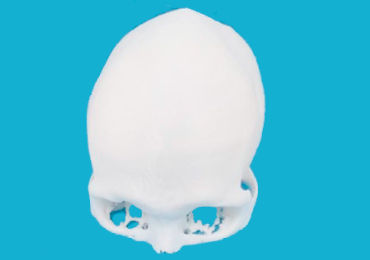
The suture running front to back along the top of the head closes early. The head becomes long and narrow (Scaphocephaly).
Read More About Sagittal SynostosisLambdoid Synostosis
One or both sutures at the back of the head close early, flattening the back of the head (Brachycephaly when both) or slanting it to one side (Posterior Plagiocephaly). The rarest form, sometimes confused with positional (deformational) Plagiocephaly.
Read More About Lambdoid SynostosisBicoronal Synostosis
Both ear-to-crown sutures close early. The head becomes wide and flattened from front to back (Brachycephaly).
Read More About Bicoronal SynostosisMultisuture Synostosis
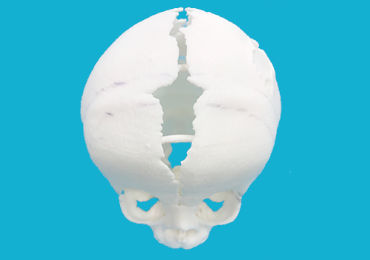
Many or all sutures close early, which can severely restrict brain growth through raised intracranial pressure; the head may be small (Microcephaly). It may be non-syndromic or syndromic — syndromic cases are linked to gene changes (FGFR1, FGFR2, FGFR3, TWIST1, EFNB1 and others) and may involve hand or brain anomalies as well.
Read More About Multisuture SynostosisHow Craniosynostosis Is Treated
Treatment is surgical and needs a multidisciplinary team: craniofacial surgeon, neurosurgeon, paediatric anaesthetist and intensivist, ophthalmologist, ENT surgeon, speech therapist and orthodontist. The type of operation depends on the type of Craniosynostosis and the age of the child. Dr Vybhav Deraje’s treatment protocol is based on strong scientific evidence and experience.
Non-Syndromic Single-Suture Craniosynostosis — Under 6 Months
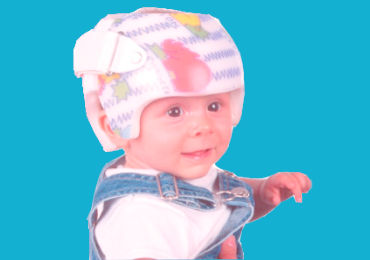
Minimally invasive (keyhole) Endoscope-Assisted Strip Craniectomy followed by Orthotic Helmet Therapy. The fused suture is removed through a small incision using minimally invasive techniques: shorter hospital stay, minimal blood loss, usually no blood transfusion and a quick recovery. The helmet then moulds the skull and allows the brain to grow normally.
Non-Syndromic Single-Suture Craniosynostosis — Over 6 Months
Open surgery (Fronto-Orbital Remodelling or Cranial Vault Remodelling) to reshape the skull. The incision runs across the top of the head from ear to ear; the neurosurgeon removes the affected suture and the craniofacial plastic surgeon remoulds the skull bones into a normal shape.
Syndromic Craniosynostosis
Posterior Vault Expansion or Fronto-Orbital Advancement — open procedures that enlarge the skull to give the brain room to grow, usually in the first year of life. Multiple operations are often needed and their timing depends on the child’s condition. A Le Fort III osteotomy and advancement after the age of 4 is sometimes required to improve Obstructive Sleep Apnoea and airway problems. Some children also need physical therapy, occupational therapy, speech-language therapy or special education.
Families from Other States and Abroad
Dr Vybhav Deraje treats children from across India and from other countries. Most of the planning can be done before you travel, so the time you spend in Bangalore is short and well organised.
Before You Travel
Send your child’s photographs, CT scan images and reports to the clinic on WhatsApp or by email. Dr Vybhav reviews them and can speak with you on a video consultation to explain the diagnosis and the options. Contact the clinic early: keyhole (endoscopic) surgery is possible only before 6 months of age, so time matters.
How Long to Plan to Stay
For keyhole surgery, admission is on the day of the operation and most children go home on the third day; there is a check about one week after surgery, when Orthotic Helmet Therapy is started. For open surgery, the hospital stay is usually 6–7 days. The clinic confirms the dates for your child before you book travel.
Follow-Up After You Return Home
Orthotic Helmet Therapy and recovery need regular reviews. The clinic plans these with you, combining visits to Bangalore with video consultations where appropriate. The Head Shape Clinic also runs outreach clinics in other Indian cities — ask whether there is one near you.
Travelling from Outside India
Patients usually travel on India’s e-Medical Visa, with an e-Medical Attendant Visa for accompanying family; check the current rules on the official Indian visa website before applying. Surgery is at Aster Whitefield Hospital, whose international patient desk offers a visa assistance letter, airport pick-up and drop, interpreters, help with FRRO registration, and nearby accommodation options.
Start with a call, WhatsApp message or email to the clinic — +91 95355 81616 · connect@drvybhavderaje.com — and send any scans you already have.
Watch Dr Vybhav Explain
More on YouTube: Dr Vybhav Deraje
Gallery
Need More Information?
Call +91 95355 81616, email connect@drvybhavderaje.com or book an appointment online .
Frequently Asked Questions
What is Craniosynostosis?
Craniosynostosis is a birth defect in which one or more of the soft joints (sutures) between the bones of a baby’s skull close too early. It changes the shape of the skull and in some children raises the pressure inside the skull.
What are the signs of Craniosynostosis in a baby?
An unusual head shape, a hard ridge along a suture, a soft spot that disappears early, slow head growth or a flat face. Raised pressure can cause developmental delay, vision changes, seizures or sleep apnoea. A craniofacial specialist assessment, usually with imaging, confirms the diagnosis.
Is Craniosynostosis surgery done through a keyhole?
For Non-Syndromic Single-Suture Craniosynostosis diagnosed before 6 months of age, Dr Vybhav Deraje performs minimally invasive Endoscope-Assisted Strip Craniectomy followed by Orthotic Helmet Therapy. Older children usually need open fronto-orbital or Cranial Vault Remodelling.
Is a helmet needed after endoscopic surgery?
Yes. Orthotic Helmet Therapy starts about a week after Endoscope-Assisted Strip Craniectomy and moulds the skull shape as the brain grows. The craniofacial surgeon and the orthotic team review progress regularly and decide when it can stop.
Where is Craniosynostosis surgery performed in Bangalore?
Dr Vybhav Deraje leads the Craniosynostosis multidisciplinary team at Aster Hospital, Whitefield, Bangalore. Consultations are through The Head Shape Clinic at Docube Clinic, Koramangala, which is dedicated to infant head-shape problems.
We live in another state. How should we plan?
Send your child’s photographs, CT scan and reports to the clinic first; Dr Vybhav can review them and speak with you on a video consultation. The clinic then confirms the dates for surgery so you can book travel. For keyhole surgery most children go home on the third day, with a check about one week after the operation. The Head Shape Clinic also runs outreach clinics in other Indian cities.
Can children from outside India be treated?
Yes. Families travel to Bangalore from other countries for Craniosynostosis surgery. Most use India’s e-Medical Visa (with an e-Medical Attendant Visa for a parent), and the international patient desk at Aster Whitefield Hospital helps with the visa assistance letter, airport transfers, interpreters and accommodation. Start with a video consultation to plan the treatment and the length of your stay.
This page is general information written by Dr Vybhav Deraje for patients and families. It does not replace an individual consultation; treatment plans depend on clinical assessment.